The Complete Guide to Domain Management and Registration for Business Success
Websites
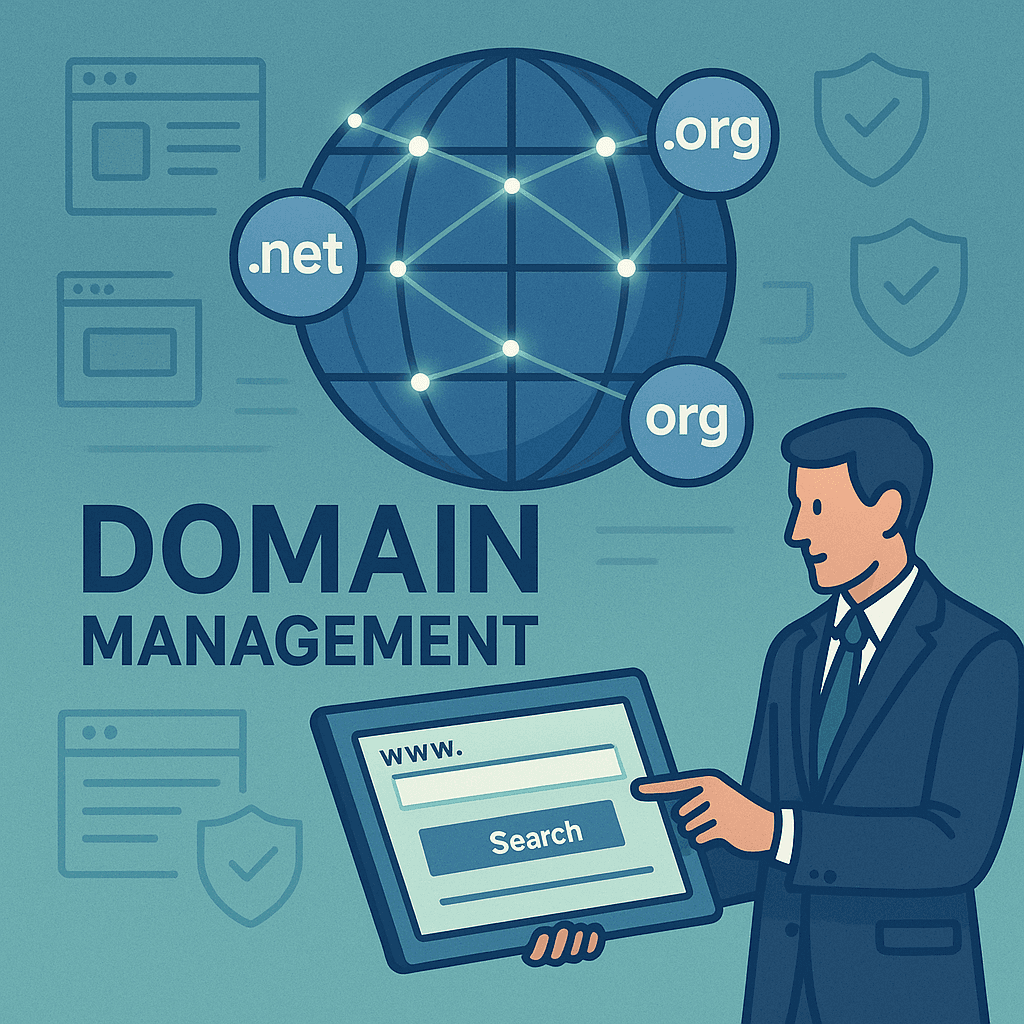
When we think about building a successful online presence, we often focus on website design, content creation, and marketing strategies. However, there's one fundamental element that serves as the foundation for everything else: your domain name. Just like a physical address helps people find your brick-and-mortar store, your domain name is how customers discover and remember your business online.
In this comprehensive guide, we'll walk you through everything you need to know about domain registration and management. Whether you're launching your first website or managing multiple domains for an established business, we'll help you make informed decisions that protect and enhance your online presence.
What Is a Domain Name and Why Does It Matter?
A domain name is your unique address on the internet – it's what people type into their browser to find your website. Think of it as your digital real estate. Just as prime real estate locations can significantly impact a physical business's success, your domain name plays a crucial role in your online success.
Your domain consists of two main parts: the name itself (like "thatguysketch") and the extension (like ".com"). Together, they create your complete web address. But a domain is much more than just a web address – it's a vital part of your brand identity, affects your Search Engine Optimization (SEO) efforts, and influences how customers perceive your business.
The Business Impact of Smart Domain Choices
We've seen countless businesses struggle because they didn't give enough thought to their domain strategy from the beginning. A well-chosen domain name can boost your credibility, improve your search rankings, and make your business more memorable. Conversely, a poorly chosen domain can confuse customers, hurt your professional image, and make marketing efforts more challenging.
Consider this: studies show that 75% of users judge a company's credibility based on their website design and domain name. When potential customers see a professional, relevant domain name, they're more likely to trust your business and engage with your services.
How to Choose the Perfect Domain Name for Your Business
Keep It Simple and Memorable
The best domain names are easy to remember, spell, and share. We recommend avoiding complex words, unusual spellings, or lengthy phrases. Your domain should be something customers can easily recall and type correctly, even when they're in a hurry or sharing it verbally.
For example, if you run a local bakery, "sweettreatsbakery.com" is much better than "swt-trts-bkry-downtown.com." The first option is clear, memorable, and tells visitors exactly what to expect.
Reflect Your Brand and Business
Your domain name should align with your business name and brand identity. If possible, use your exact business name as your domain. This creates consistency across all your marketing materials and makes it easier for customers to find you online.
When your business name isn't available as a domain, consider variations that still clearly represent your brand. You might add your location, a relevant keyword, or a descriptive word that enhances your brand message.
Consider Search Engine Optimization (SEO)
While having keywords in your domain name isn't as critical for SEO as it once was, it can still provide some benefits. If you can naturally incorporate a relevant keyword that describes your business or industry, it may help search engines understand what your website is about.
However, don't sacrifice brand clarity for keyword stuffing. A domain like "best-cheap-plumber-services-city.com" looks spammy and unprofessional. Instead, focus on creating a brandable domain that you can build authority around over time.
Choose the Right Domain Extension
The domain extension, also called a Top-Level Domain (TLD), is the part that comes after the dot. While ".com" remains the most popular and trusted extension, there are now hundreds of options available, including industry-specific extensions like ".tech," ".store," or ".consulting."
We generally recommend sticking with ".com" for most businesses because:
It's what people expect and trust most
It's easier to remember
It typically performs better in search results
It's more valuable for resale if needed
However, if your preferred ".com" domain isn't available, consider other reputable extensions like ".net," ".org," or a relevant industry-specific extension.
The Domain Registration Process: Step by Step
Step 1: Research and Verify Availability
Before falling in love with a domain name, you need to check if it's available. Use domain search tools to verify availability across different extensions. We also recommend checking if the name is trademarked or if similar social media handles are available to ensure brand consistency.
Step 2: Choose a Reputable Domain Registrar
A domain registrar is a company authorized to sell and manage domain names. Choosing the right registrar is crucial for your long-term success. Look for registrars that offer:
- Competitive pricing with transparent renewal rates
- Reliable customer support
- Easy-to-use management tools
- Strong security features
- Additional services like Domain Name System (DNS) management
For businesses looking for a trusted domain registrar, we recommend checking out TGS Domains. They offer comprehensive domain services with a focus on business needs and reliable support.
Step 3: Complete the Registration
Once you've chosen your domain and registrar, the registration process is typically straightforward. You'll need to:
Provide accurate contact information
Choose your registration period (usually 1-10 years)
Configure basic settings like privacy protection
Set up Domain Name System (DNS) records if needed
Step 4: Configure Essential Settings
After registration, configure important settings like:
- WHOIS Privacy Protection: This hides your personal contact information from public domain databases
- Auto-renewal: Prevents accidental domain expiration
- Domain locking: Protects against unauthorized transfers
- DNS settings: Point your domain to your web hosting provider
Essential Domain Management Best Practices
Implement Strong Security Measures
Domain security should be a top priority for every business. Cybercriminals often target domains because gaining control of a domain can give them access to email, websites, and customer data. Implement these security measures:
Two-Factor Authentication (2FA): Enable 2FA on your domain registrar account to add an extra layer of security beyond just a password.
Domain Locking: Most registrars offer domain locking, which prevents unauthorized transfers or changes to your domain settings.
Regular Monitoring: Set up alerts for any changes to your domain settings and monitor for suspicious activity.
Strong Passwords: Use unique, complex passwords for your domain registrar account and change them regularly.
Keep Your Information Current
Maintain accurate contact information in your domain registration. This ensures you receive important notifications about renewals, security alerts, and policy changes. Outdated contact information can lead to missed renewal notices and potential domain loss.
Plan for Renewal and Expansion
Domains require annual renewal, and forgetting to renew can result in losing your domain entirely. Set up automatic renewal to prevent accidental expiration. Also, consider registering multiple years in advance to lock in current pricing and ensure long-term control.
Think about registering variations of your main domain to protect your brand. This might include common misspellings, different extensions, or related keywords that competitors might target.
Organize Multiple Domains Effectively
As your business grows, you may acquire multiple domains for different products, services, or marketing campaigns. Develop a system for organizing and managing these domains:
Use consistent naming conventions
Document the purpose of each domain
Set up centralized management when possible
Regular audit unused domains
Advanced Domain Strategies for Business Growth
Geographic and Market Expansion
If you plan to expand into new geographic markets, consider registering country-specific domains. For example, if you're a US-based business expanding to Canada, you might register the ".ca" version of your domain. This can help with local SEO and builds trust with regional customers.
Brand Protection Through Domain Portfolio
Successful businesses often register multiple domains to protect their brand. This might include:
Common misspellings of your main domain
Different extensions of your primary domain
Domains related to your products or services
Domains that competitors might use to confuse customers
While this requires additional investment, it's often much cheaper than dealing with brand confusion or legal issues later.
Subdomain Strategy
Subdomains allow you to create separate sections of your website for different purposes. For example, "blog.yourbusiness.com" or "shop.yourbusiness.com." This can help organize your content, improve user experience, and create targeted marketing campaigns.
Common Domain Management Mistakes to Avoid
Letting Domains Expire
One of the most costly mistakes businesses make is allowing important domains to expire. When a domain expires, it becomes available for anyone to register, potentially including competitors or cybercriminals. Always set up auto-renewal and monitor expiration dates.
Ignoring Domain Security
Many businesses treat domain registration as a "set it and forget it" task. However, domains require ongoing security attention. Regularly review your security settings, update passwords, and monitor for suspicious activity.
Choosing Registrars Based Only on Price
While cost is important, choosing a registrar based solely on the lowest price can be problematic. Cheap registrars may offer poor customer support, limited features, or unreliable service. Consider the total value, including support quality, security features, and ease of use.
Not Planning for Business Changes
Businesses evolve, and your domain strategy should evolve with them. Consider how potential business changes might affect your domain needs. Will you expand into new markets? Launch new products? Merge with another company? Planning can save significant time and money.
The Future of Domain Management
The domain landscape continues to evolve with new technologies and changing user behaviors. Emerging trends include:
New Generic Top-Level Domains (gTLDs): Hundreds of new domain extensions are now available, offering more specific branding opportunities.
Enhanced Security Standards: New security protocols and authentication methods are being developed to combat domain-related cyber threats.
Integration with Emerging Technologies: Domains are being integrated with blockchain technology, artificial intelligence, and other emerging technologies.
Mobile-First Considerations: As mobile usage continues to grow, domain strategies must consider mobile user experience and voice search optimization.
Taking Action: Your Next Steps
Now that you understand the importance of strategic domain management, it's time to take action. Start by auditing your current domain portfolio:
Review Your Current Domains: List all domains you own and evaluate their relevance to your current business goals.
Assess Your Security: Check that all security features are enabled and your contact information is current.
Plan for Growth: Consider what additional domains might benefit your business expansion plans.
Choose the Right Partners: Work with reputable service providers who understand business needs.
Remember, your domain name is often the first impression customers have of your business online. Investing time and thought into your domain strategy pays dividends in credibility, marketing effectiveness, and long-term business success.
Whether you're registering your first domain or managing a complex portfolio, the key is to approach domain management as a strategic business decision rather than a technical necessity. With the right approach and reliable partners like TGS Domains, you can build a strong foundation for your online presence that supports your business goals for years to come.
Spaces available
Ready to Grow Your Brand?
We help businesses stand out, build trust, and convert more customers through thoughtful design and smart digital strategy