Healthcare Realty Trust
Streamlining Internal Directory Updates with Thoughtful UX & Automation
Real Estate
Overview
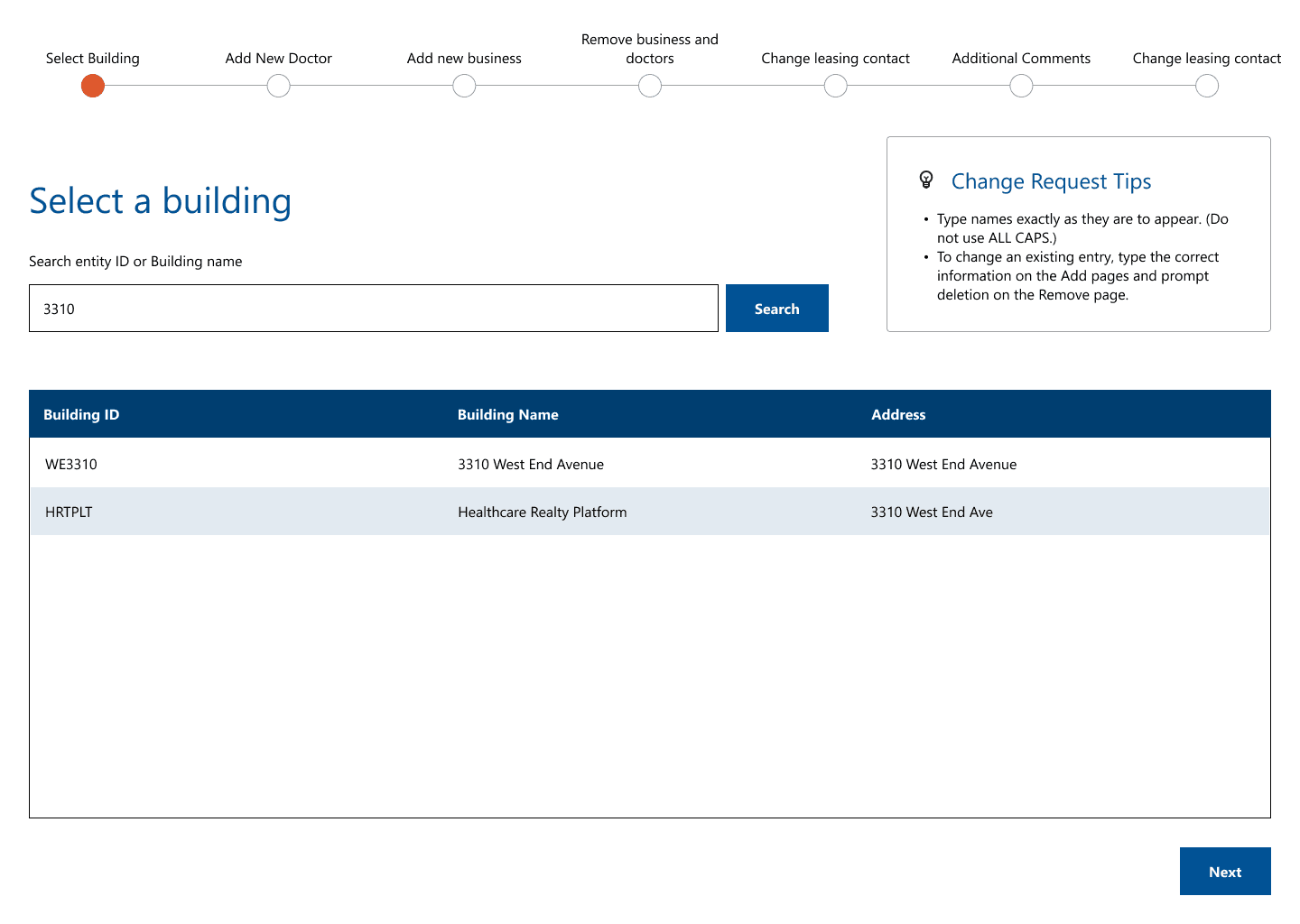
An enterprise client approached That Guy Sketch with a common pain-point: their internal directory update process was inefficient, error-prone, and lacked user-friendliness. Employees relied on static spreadsheets or manual request emails whenever someone’s role, contact info, or team changed. The business needed a digital solution—a directory change form that could empower staff, enforce data integrity, and integrate smoothly with internal systems. That Guy Sketch built a modern, user-centered form experience that became the front door to accurate directory data and lower administrative overhead.
The Challenge
User Research & Needs Assessment
We began by interviewing both request-submitters (regular staff) and data-approvers (IT/HR/Operations) to map out pain points: where requests stalled, how many edits were required after submission, common user frustrations. This research grounded our understanding of workflow, tone, language, and system requirements.
UX Strategy & Form Architecture
With insights in hand, we designed a form experience focused on clarity and speed:
Minimal required fields, smart defaults and context-sensitive help
Logical grouping of data (personal info, role/team, contact details, effective date)
Preview of changes so users understand what will update
Clear “why this matters” language to promote accuracy and completeness
Built-in validation, role-based approvals, and audit trail logic so back-office teams could trust the data
Prototyping & Validation
We built a high-fidelity prototype in Figma and conducted usability sessions with cross-section of users. Feedback guided refinements—especially around form length, error handling, mobile responsiveness, and confirmation flows. We reiterated until users felt confident and fluent.
Implementation Handoff & Integration Readiness
Deliverables included:
Form UI screens, states (idle, error, success) and interactions
Workflow diagram: submission → validation → approval → update
Role-mapping table for who sees/approves what data
Design system components aligned with the client’s branding
Recommendations for integration: API endpoints, auto-notifications, audit logging
Our Approach
The project aimed to deliver a centralized, user-friendly request system that would:
Standardize submissions with required fields and dropdown menus.
Provide visual change lists to eliminate guesswork.
Reduce time wasted on email communication.
Create built-in tracking and transparency for property managers.
Scale easily across Healthcare Realty’s portfolio of properties.
The Impact
By redesigning the directory change form experience, we achieved:
A clear, streamlined process for staff to submit updates with fewer questions and less hesitation
Improved data accuracy and completeness, reducing follow-up edits by the operations team
Higher adoption: staff felt the new form was easy and trustworthy
A robust foundation for scaling: with audit logs, approval flows, and integration points, the system is ready to evolve
The internal directory is now more than a passive listing—it’s a living asset, supported by user-centric tools.
Highlighted Deliverables
User behaviour research, interviews and journey maps
UX strategy and form architecture
High-fidelity form prototype, mobile-friendly
Workflow specification and approval-logic map
Developer-ready asset package and implementation guidance
Created training documentation and guides to accelerate adoption.

Results
For the organisation, this project delivered:
Reduced admin overhead and fewer manual corrections
Enhanced trust in directory data across teams—better communication, fewer contact errors
A workflow employees feel confident using—and building upon
A scalable infrastructure for other internal tools (onboarding, off-boarding, role changes)
Ultimately, the new experience enables efficient and accurate directory management, while also strengthening internal operations.


Ready to Grow Your Brand?
We help businesses stand out, build trust, and convert more customers through thoughtful design and smart digital strategy